
What’s the weirdest thing growing in your garden?
Roman roots, Incan blooms and other botanical experiments

The deep purple flower called to me from the catalog. The blueish leaves intrigued me. Then I saw the name and knew I had to order it. Honeywort.
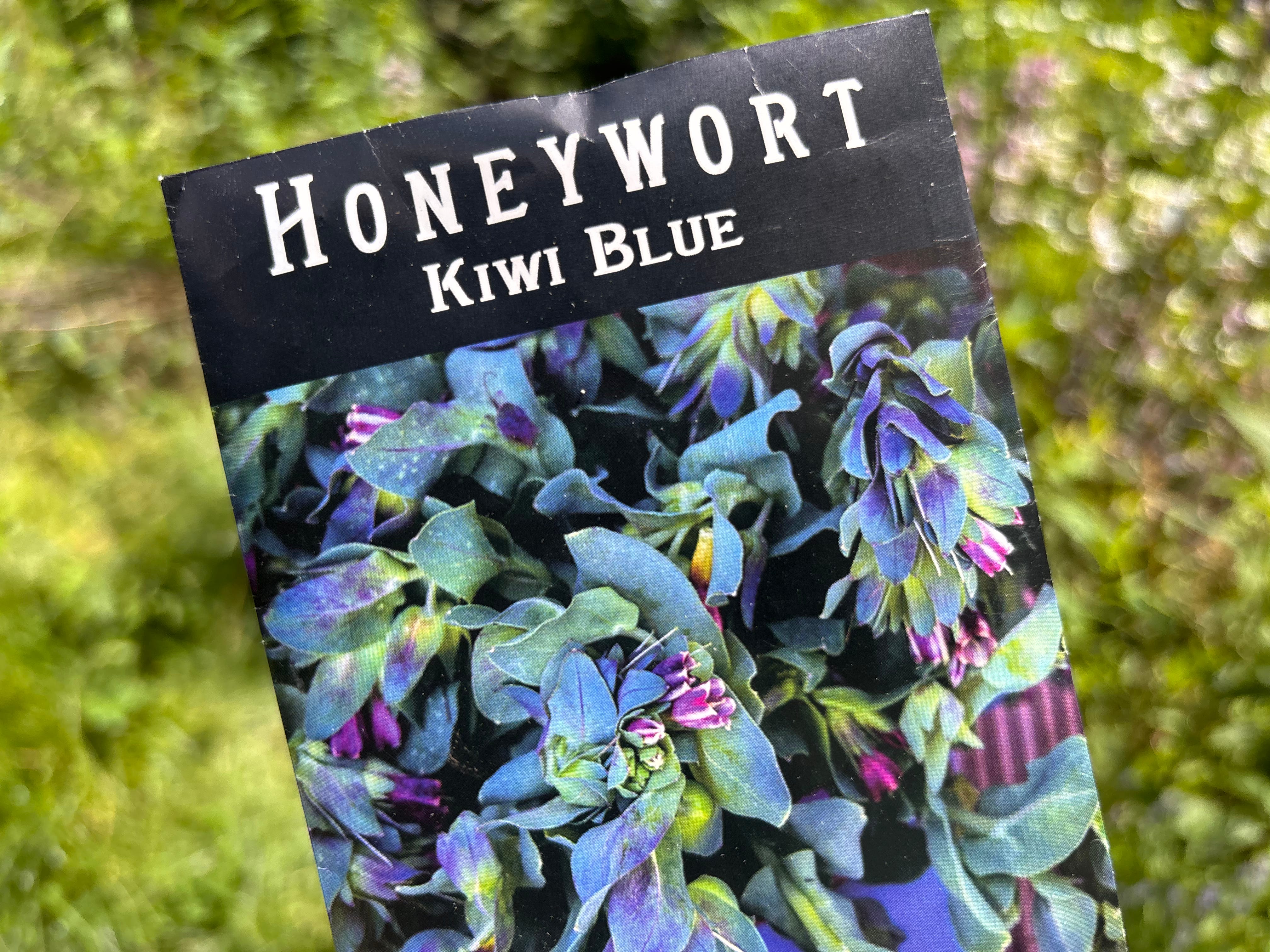
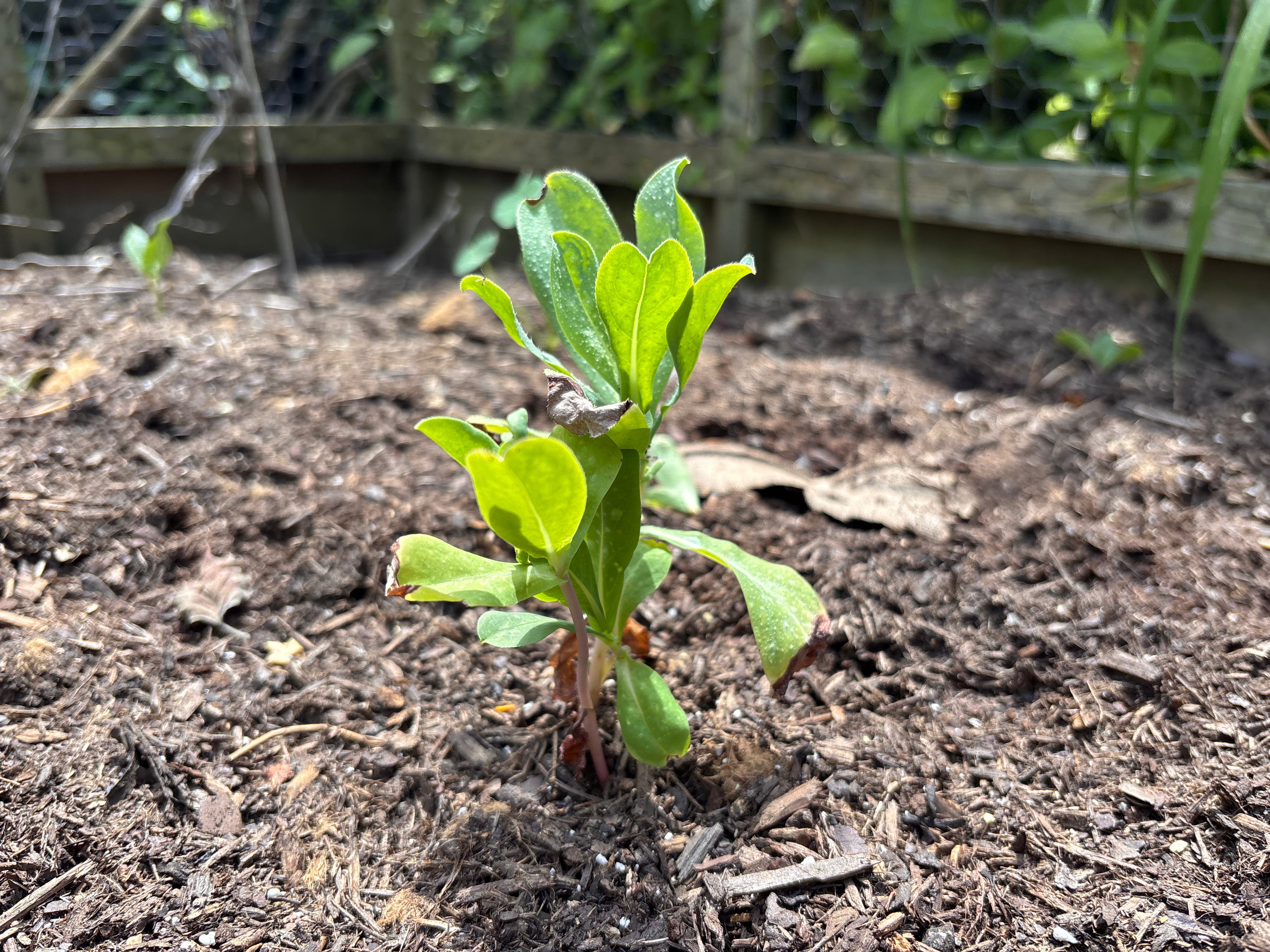
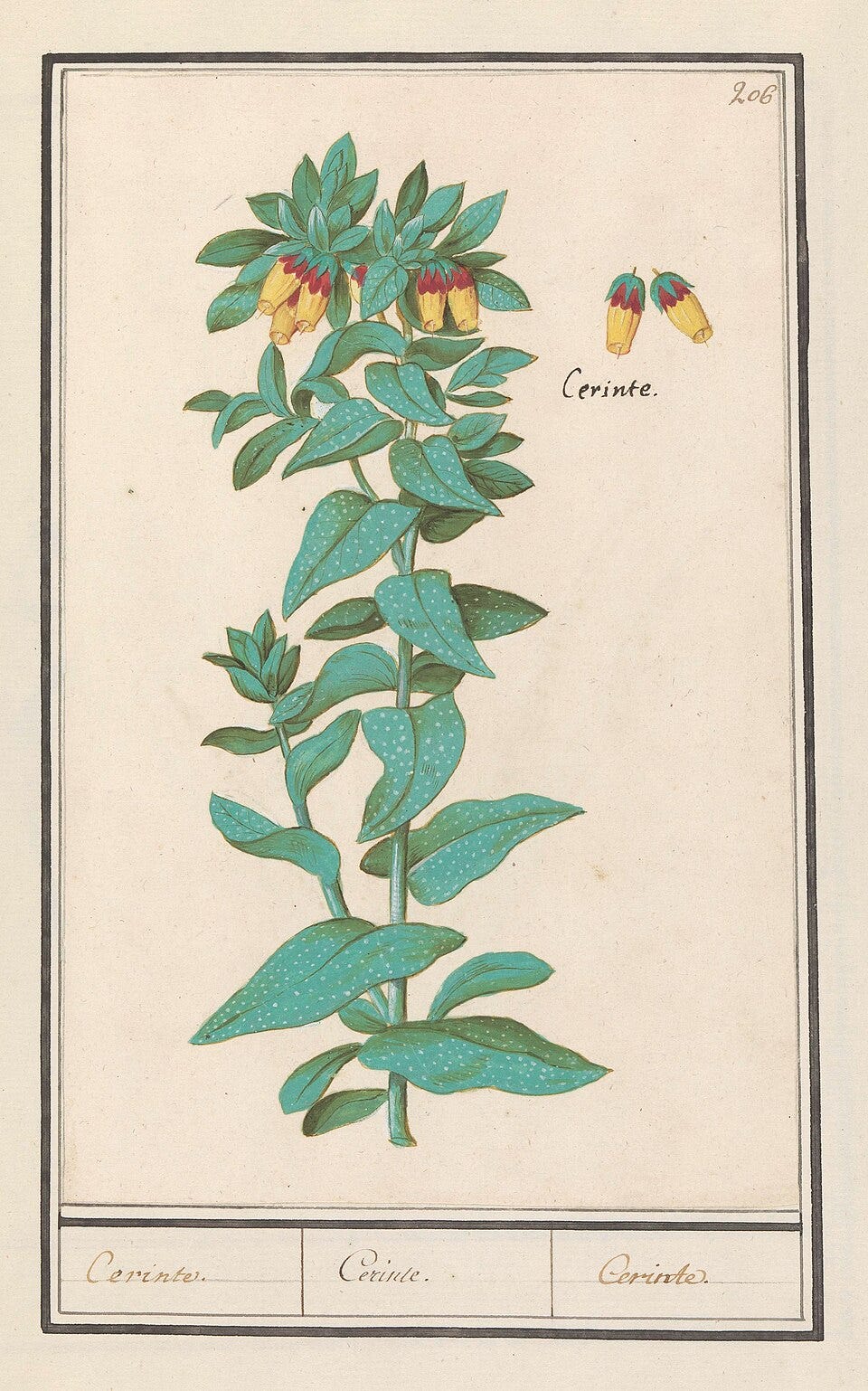
In the wild, honeywort (Cerinthe major purpurascens) can be found growing in meadows across the Mediterranean basin. At some point it became a popular bloom in European flower gardens. John Gerard wrote about it in his 1597 herbal and notes that the flowers “taste of honey when it is sucked” but concludes that, when it comes to herbal remedies, “there is not any experiment of their virtues worth the writing.” Despite this lack of virtues, I bought a packet of honeywort seeds and planted them inside in April. Here’s one seedling in the garden:
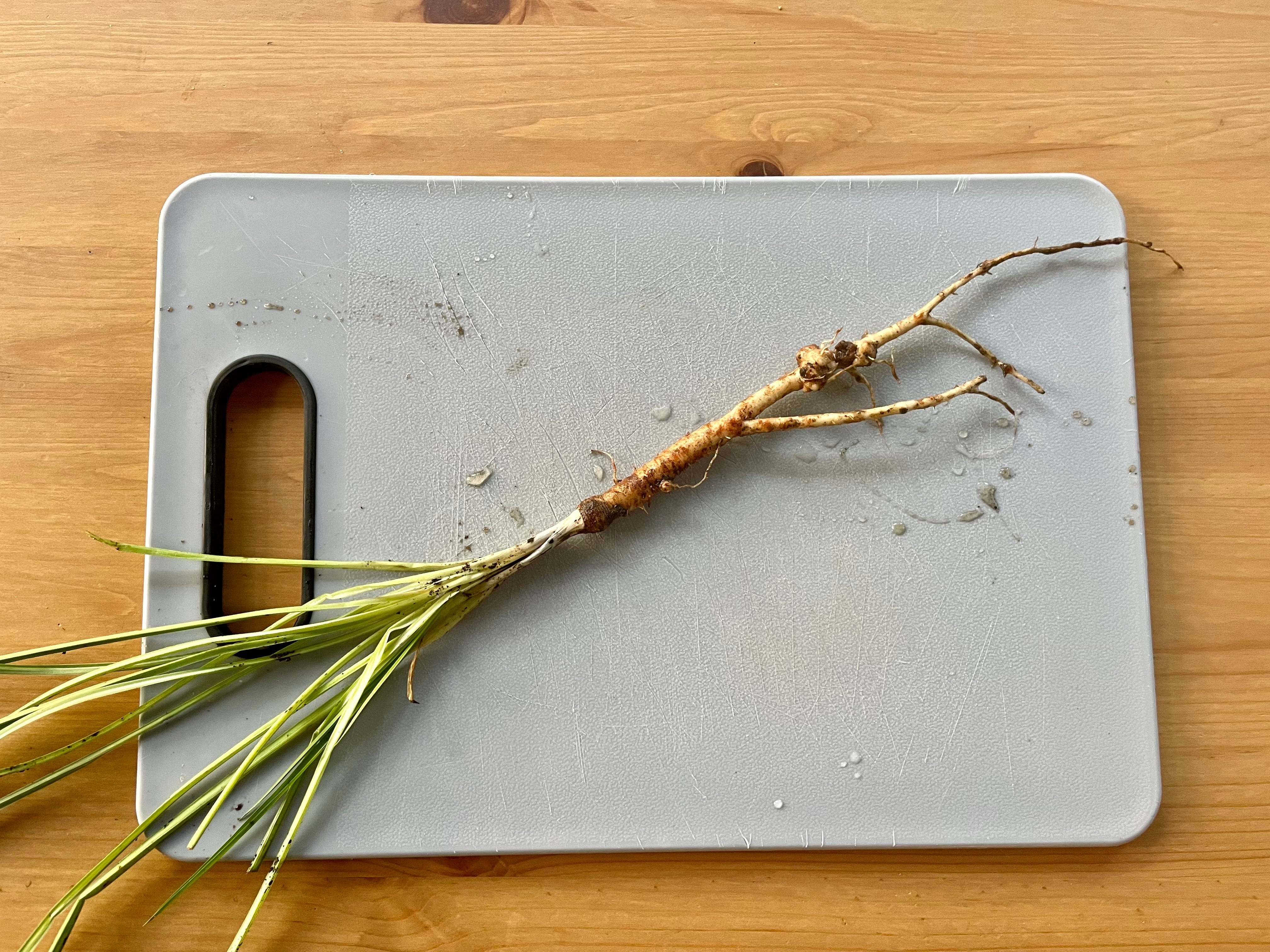
Every year I try to grow something new to me in our garden. A few years ago it was skirret (Sium sisarum), a root vegetable commonly used in Middle Ages cuisine. I gave seedlings to all my friends and at the end of the season we got together for a skirret potluck.

The year after I planted salsify (Tragopogon porrifolius), another European root.
One year I planted tarwi (Lupinus mutabilis), a member of the lupine family with beautiful bracts of purple flowers and an edible bean. The tarwi never thrived in our garden but it did share one individual bloom – not even a whole bract – with me.
There’s something incredible about reading about a plant in a book or catalog and, weeks later, watching it grow in your own garden. I’m eating the same skirret roots that Roman Emperor Tiberius enjoyed in his meals! I’m marveling at the same tarwi blooms that pre-Incan peoples were growing in the Andes Mountains! I’m still two months away from honeywort blooms but I’m already looking forward to the taste of honey” that John Gerard described.
And there’s one more experiment I’ve got growing in the garden. It was an experiment that I started indoors over a year ago but this summer, I decided to move this plant outdoors. It’s a tropical grass that I’m sure I consume every day.
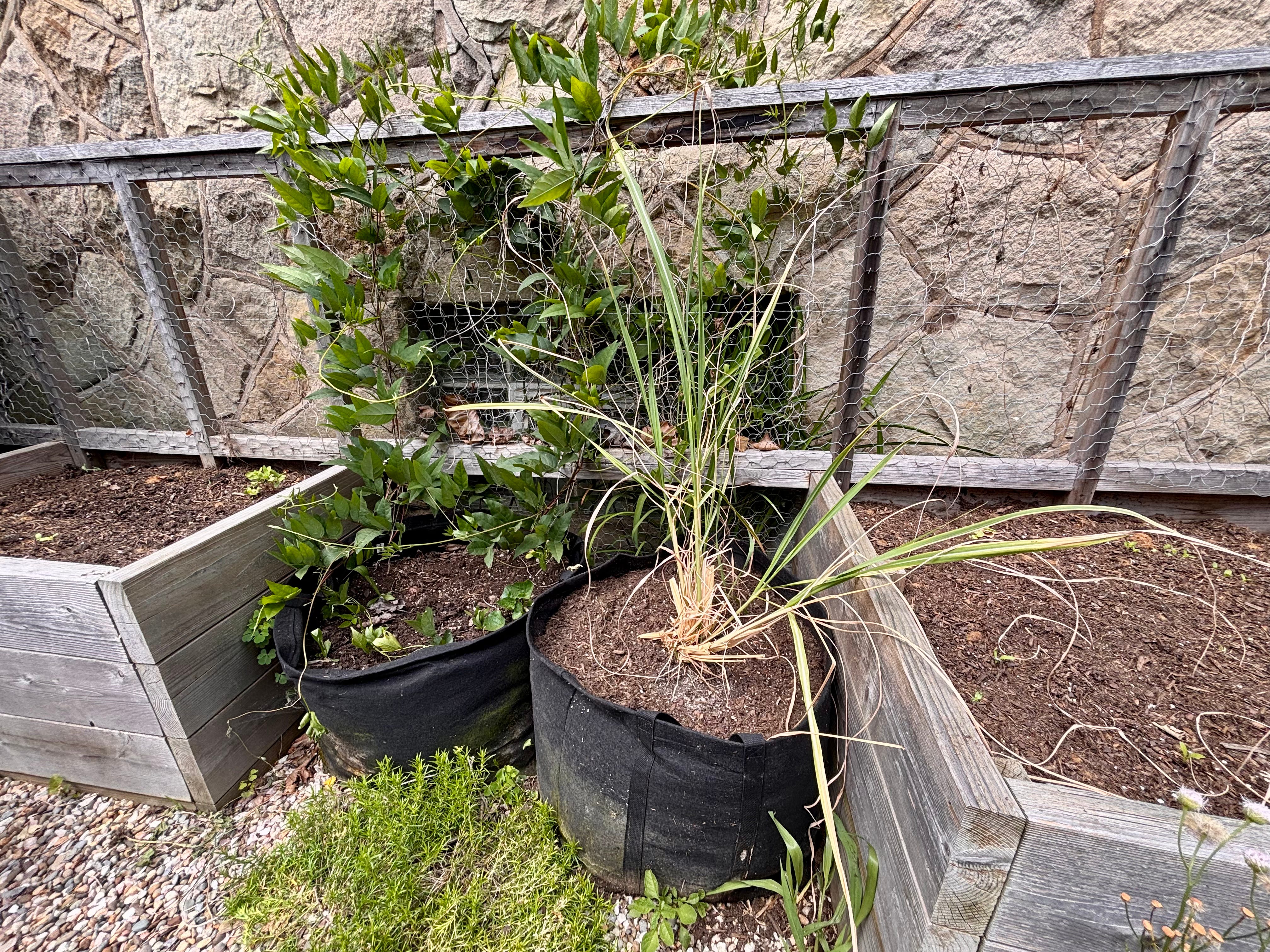
Next to my zinnias and tomatoes, I’ve got a very small crop of sugarcane growing. This is not its preferred climate and it struggled through the winter in our sunroom but I’m hoping that it thrives in the Pittsburgh summer. Sugar is a food that I interact with so often – it’s in my coffee and baked goods and Brooke’s Nerds Gummy Clusters – and it’s a funny thing to get acquainted with its botanical source.
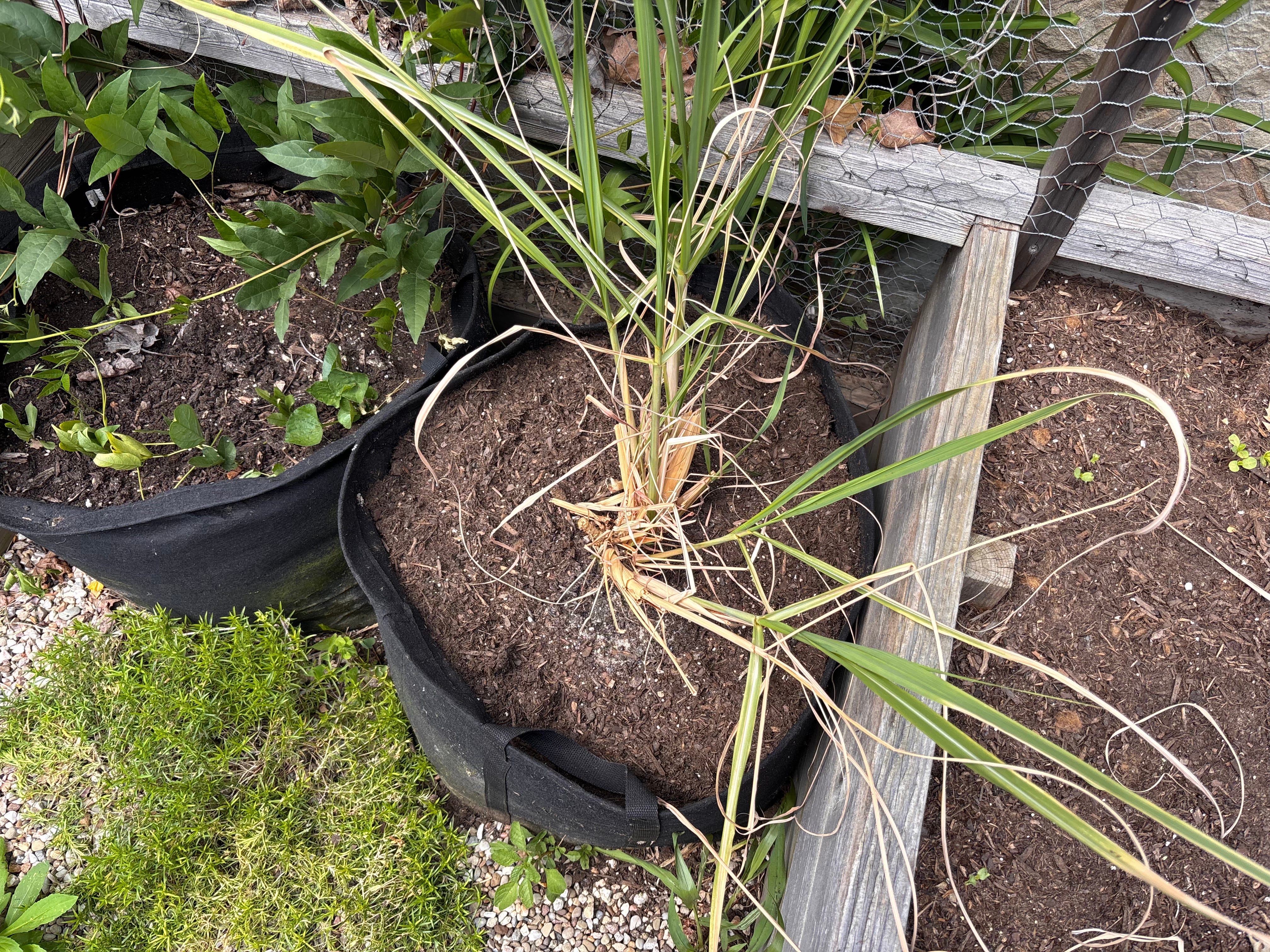
It’s like meeting a celebrity whose work I’ve been familiar with for a long time. People say Tom Cruise is shorter than you’d expect and this sugarcane plant is sharper than I expected. And also greener. I’m hoping that by the end of the season its stalks have grown thicker so Brooke and I can cut off a chunk and chew on it. Or maybe we can even try to make cookies with it?
What’s the most unusual or interesting plant growing in your garden? I’d love to hear about it.
And one more thing: A few weeks ago I got to interview Merlin Sheldrake, author of Entangled Life, for The Pittsburgh Review of Books. Here’s a short excerpt from that:
BOAZ: Learning about fungi has taken you so many places. You write about being buried in compost and secretive truffle hunting expeditions and, when I heard you speak at a conference last year, you showed a photo of yourself lying in mud with your hand trying to reach something in a deep hole. I wonder if you can share some of the strangest places or absurd situations that you’ve encountered thanks to this field of study?
MERLIN: The other day I was playing around with my brother Cosmo and our colleague Jonathan Hope in the brewhouse where we make our hot sauce. Cosmo had a device a bit like a lie detector that allows you to measure the variations in electrical conductance as a small current passes between two electrodes. He stuck the electrodes in a big pile of grains being devoured by a koji fungus and connected the device to solenoids that whacked glass bottles, making dinging noises at haphazard intervals as the bioelectrical activity of the koji fluctuated. There were lots of levels of absurd.
You can read the rest of the interview here.
I once grew 14’ kulli corn. It was quite dramatic
Ground cherries! Last year when I did this I got enough to pick one or two every morning to enjoy on my way to work, which always started my day off well.